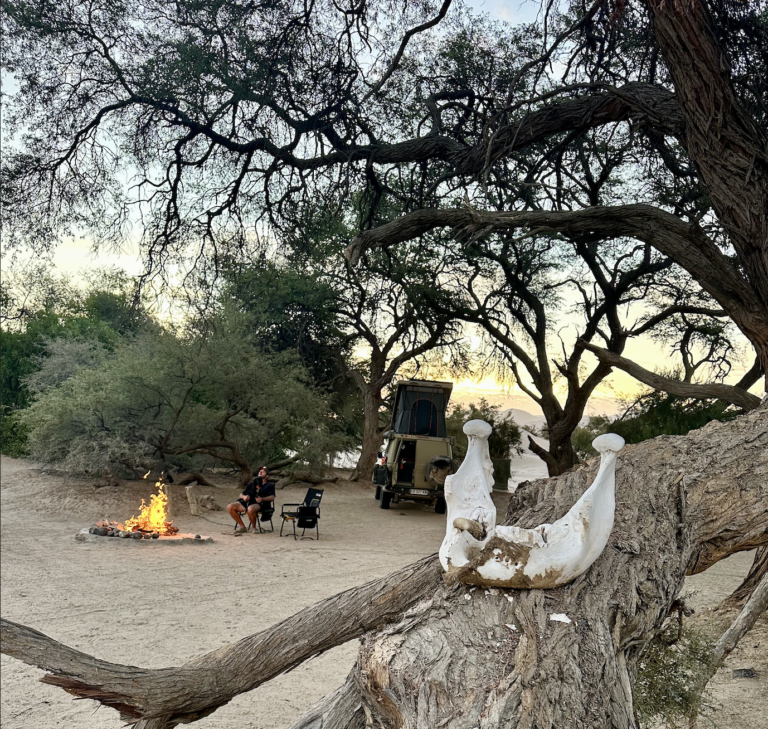
What accessories really made a difference on the road ? Here’s our hands-on feedback from real-world travel.
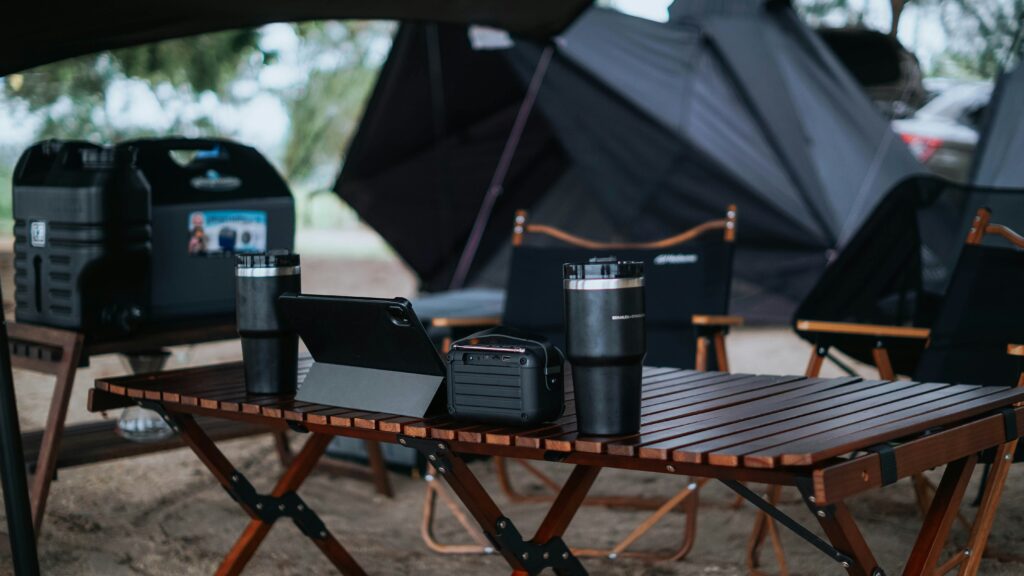
When preparing an overlanding trip, we often focus on the “big” gear : rooftop tents, fridges, vehicle setups… But after several road trips, we can tell you one thing : it’s often the small accessories that make the biggest difference in everyday life.
The ones you use every single day.
The ones that save you from small headaches.
The ones you’re genuinely glad to have when conditions get a bit more extreme.
Heat, dust, humidity, rough roads — everything we carry has been put to the test.
In this article, we’re sharing the 5 accessories we would take again without hesitation.
1/ The Flextail x OuTask telescopic lantern
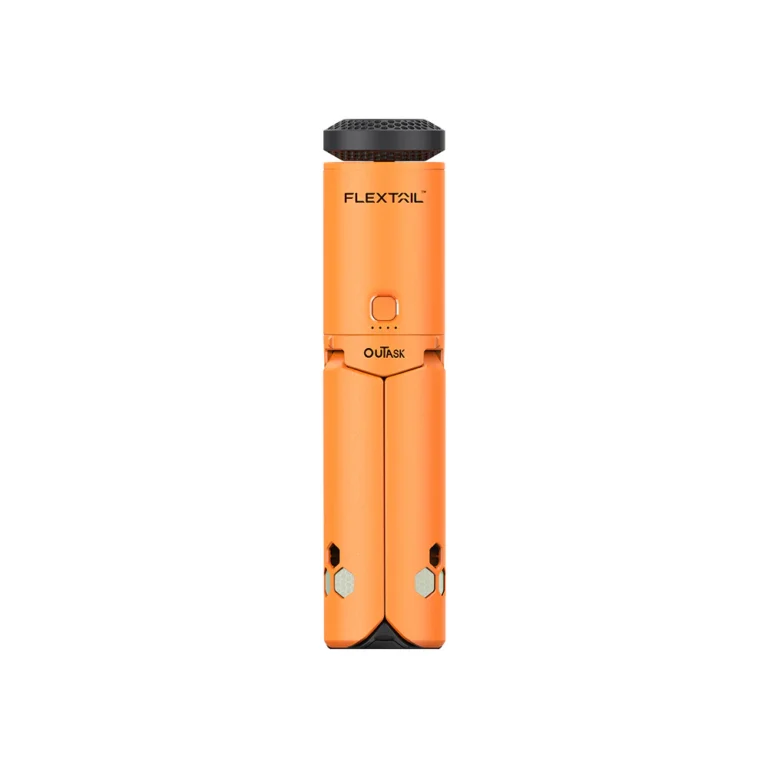
This portable lamp is highly versatile and particularly well suited for bivouac and overlanding.
Thanks to its telescopic design, it can be used as a standing lamp, a table lamp, or a more compact light depending on your needs. It offers several lighting modes (adjustable brightness, warm or cold light, SOS mode), making it useful in many everyday travel situations. Its battery provides excellent autonomy and can also be used to charge other devices : a real plus on the road.
Built to withstand demanding conditions (dust, humidity, heavy use), it is rated IPX6 and IPX7. Now, that may sound more like a Wi-Fi password than anything else, but in practice it simply means the lamp handles rain, splashes, and even temporary immersion without any issue. In short, not exactly the kind of gear that’s afraid of a wet evening at camp.
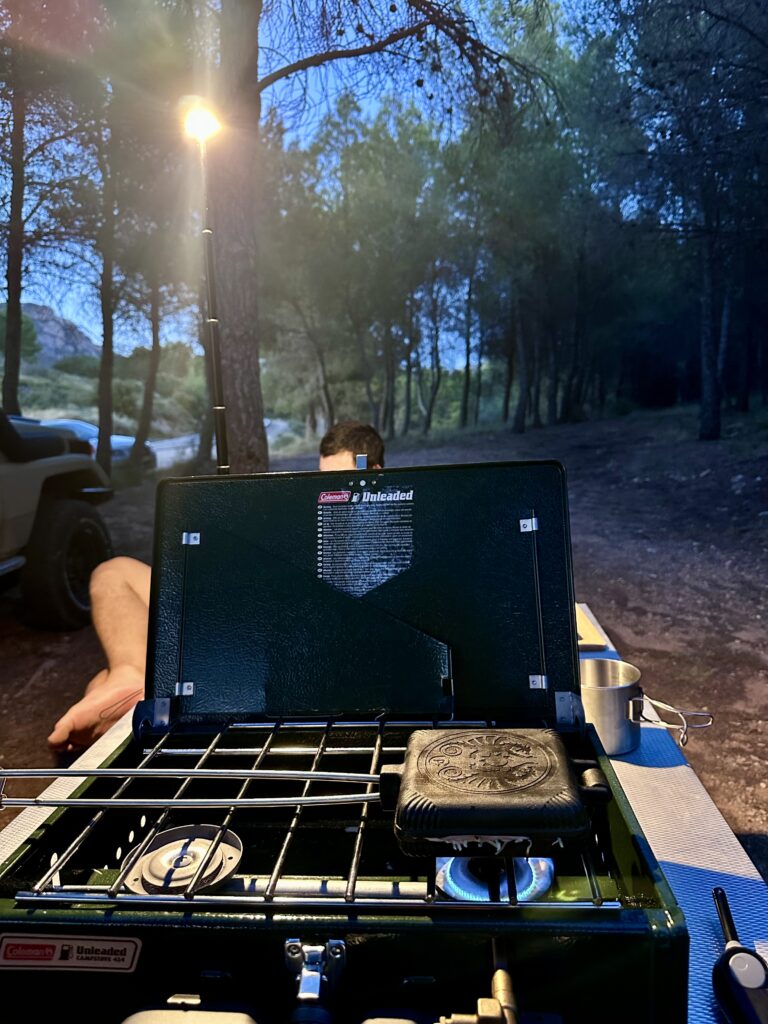
Cooking. Spain 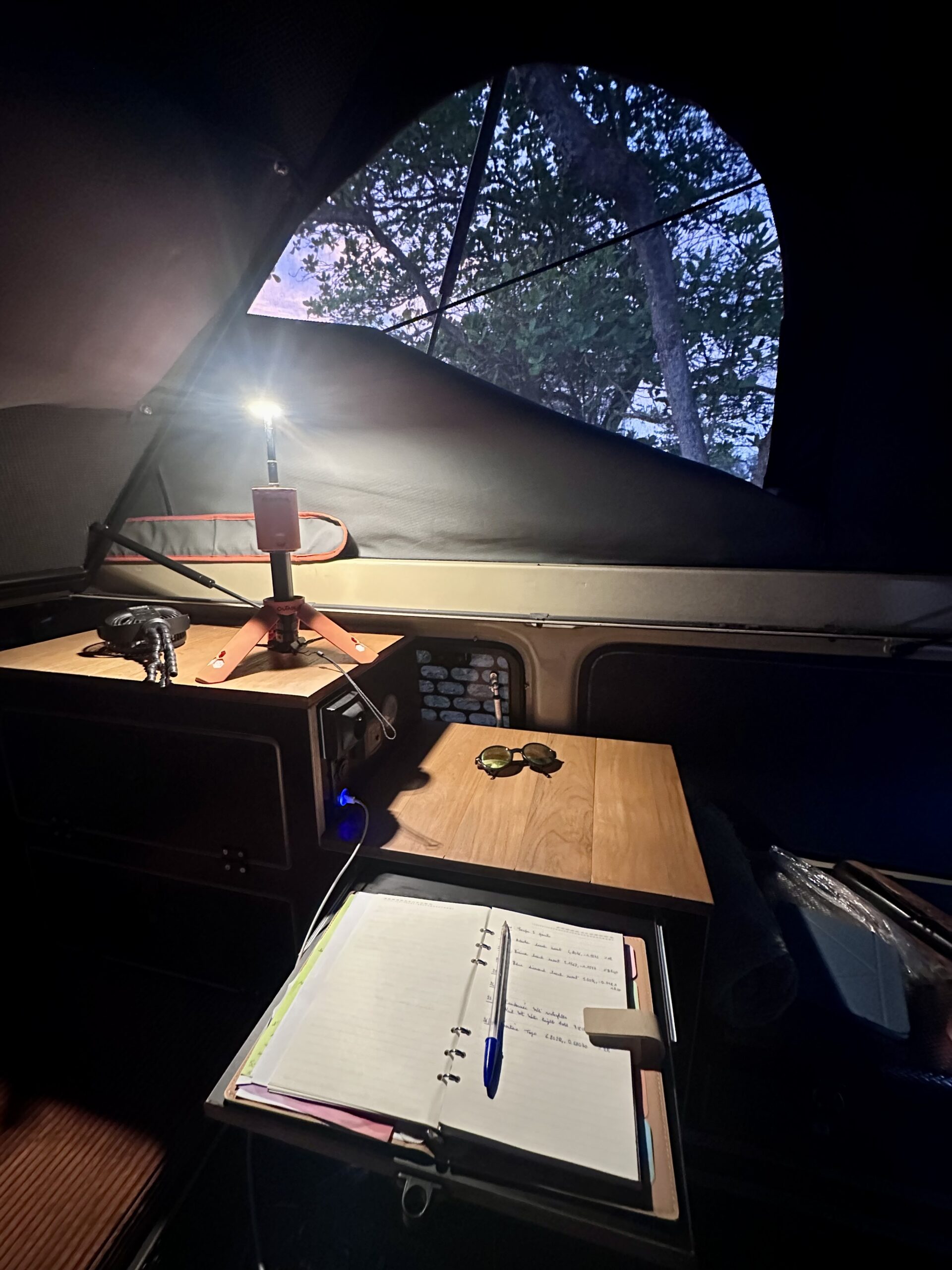
Work. Ghana 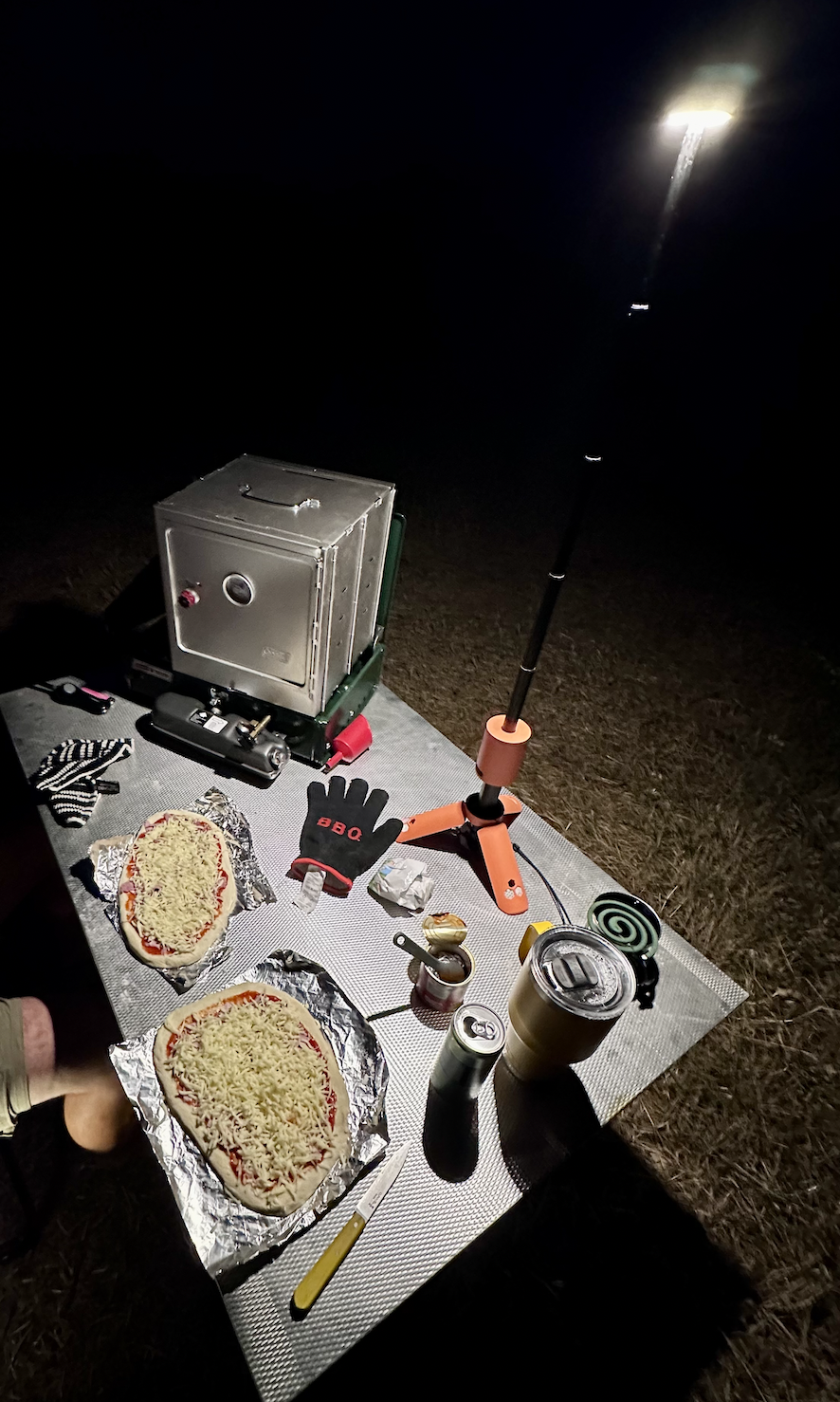
Cooking. France 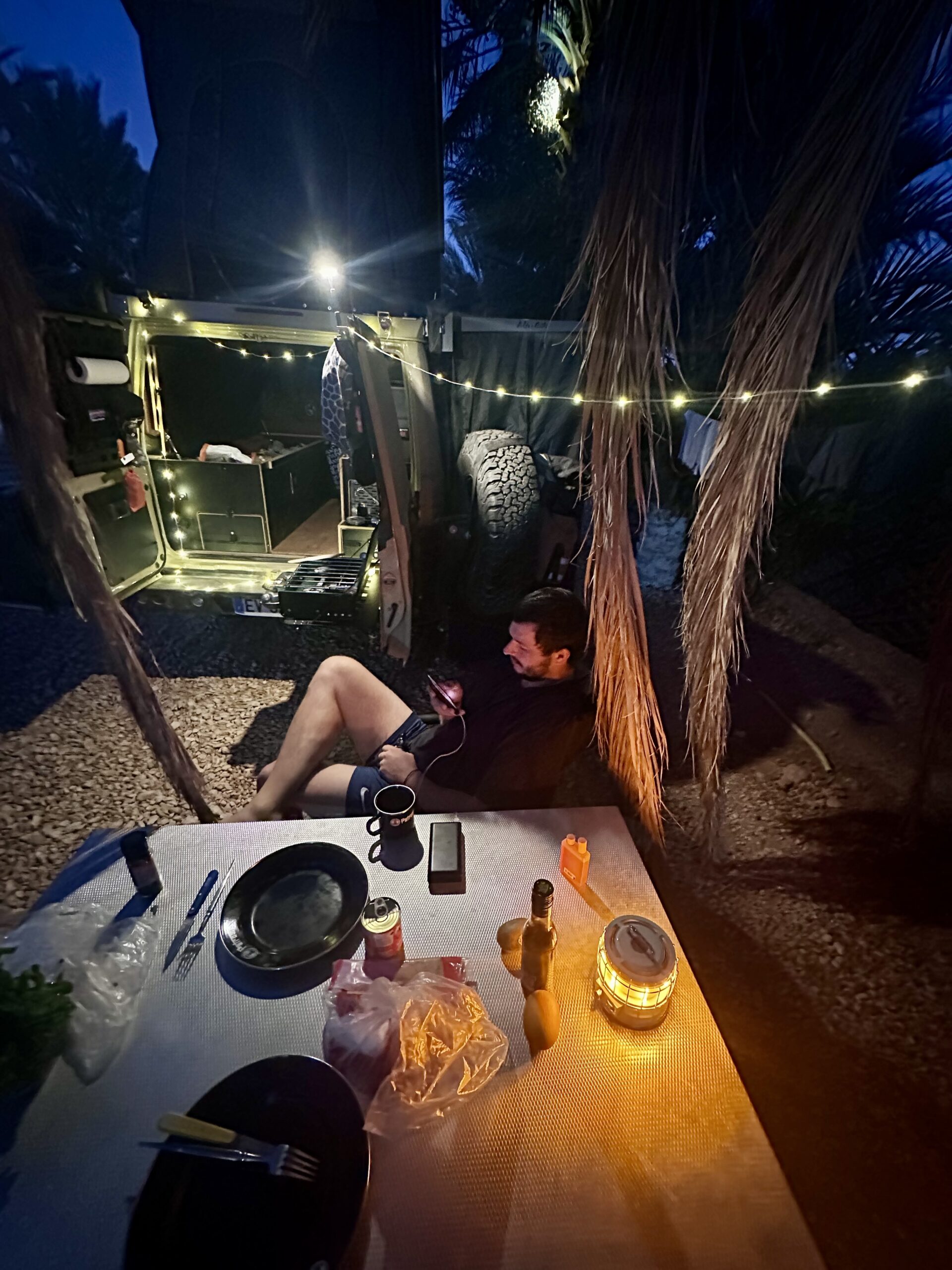
Bivouac. Morocco 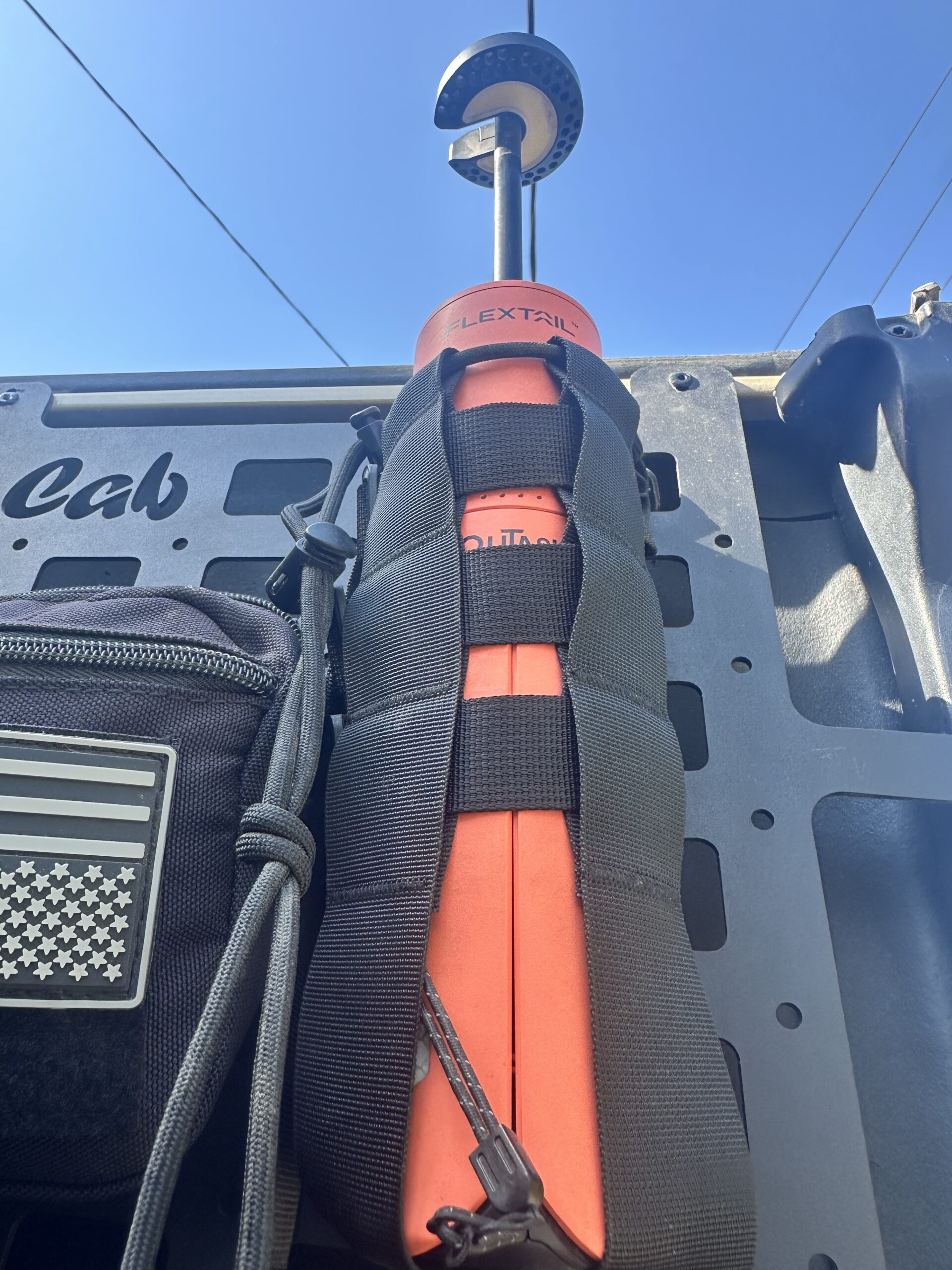
Storage.
Our real-world use
We used this lamp every single day during our last 6-month road trip.
At camp, it mainly came into play in the evenings to light up our outdoor meals. We actually found it a perfect makeshift setup in a MOLLE bottle holder mounted on the rear door of the Toy, keeping it always within easy reach. From there, it would light up the entire cooking area, set up on the rear door alongside our table.
Inside the vehicle, it proved just as useful. In the evenings, before going to sleep, it helped us wind down and finish the day in a comfortable atmosphere. Being able to adjust both brightness and colour temperature really made a difference : we almost always went for a warm, low-intensity light, which created a much more pleasant vibe inside the 4×4.
But its use wasn’t limited to bivouacs.
During our last trip across Africa, we sometimes stayed in places where electricity was unstable or even non-existent. In Congo, for example, we spent time in a house where power cuts could last for hours… sometimes even a full day. We ended up cooking in the kitchen on a gas stove, simply lit by the OuTask. An unexpected situation that quickly became part of daily life as the journey went on.
In Togo, on a collaborative farm where electricity was very unreliable, it accompanied us through several evenings shared with the people we met there. It provided the perfect lighting for simple moments together, without relying on the power grid. The lantern mode, thanks to its telescopic stand, also proved particularly useful. Once deployed, it could easily light up an entire area around the camp (for example, to help keep snakes at a distance).
Looking back, it’s clearly one of the most used accessories of the whole trip, and one that contributed the most to our day-to-day comfort.
We’ve added a link to the model here if you want to check it out (affiliate link — it helps support the site at no extra cost to you).
2/ The Leatherman multitool
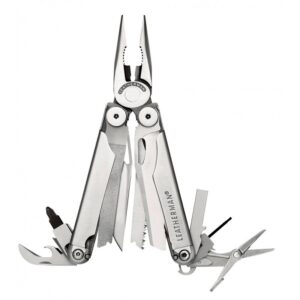
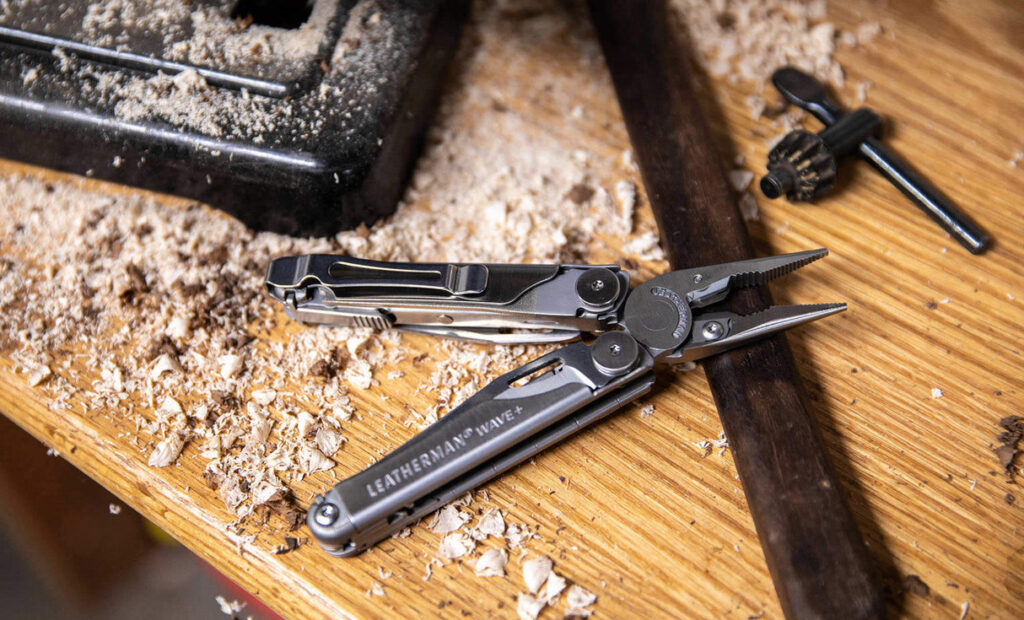
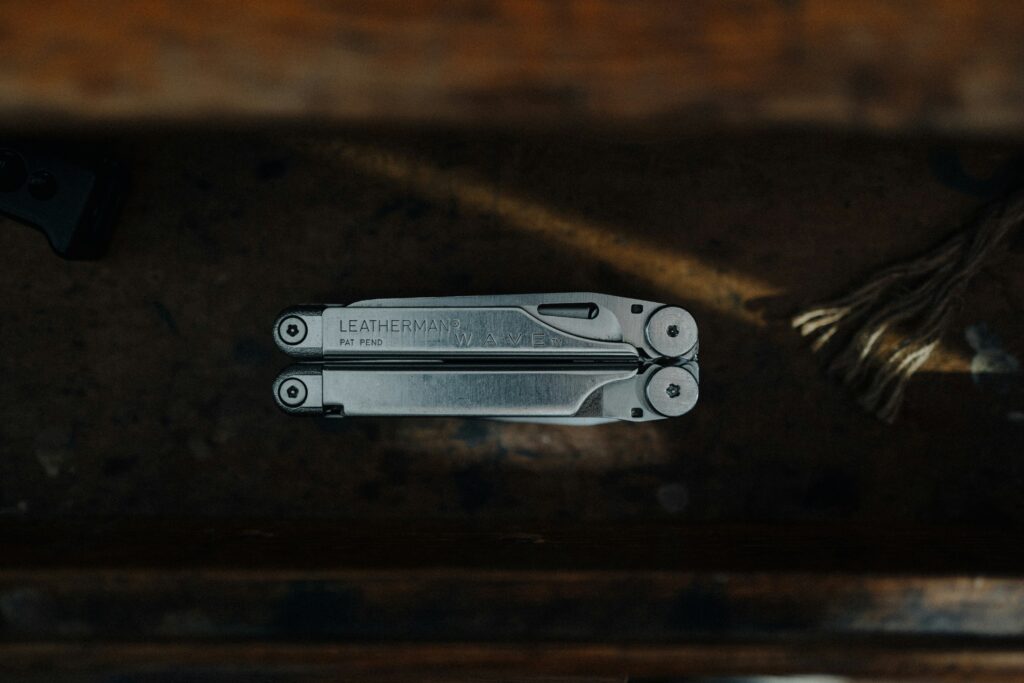
The Leatherman multi-tool is one of those pieces of gear you end up using far more often than expected when overlanding. Compact and built to last, it’s designed to handle both travel use and everyday repairs on the road.
It brings together 18 essential tools (depending on the model) in a single format : pliers, replaceable wire cutters, straight and serrated blades, saw, spring-action scissors, file, ruler, can opener, bottle opener, as well as multiple screwdriver bits.
All tools are easy to access, even one-handed, which makes it particularly practical in real field conditions.
Tough and built for durability, it’s a genuinely versatile tool for handling quick fixes and unexpected issues on the road.
Our real-world use
We used these multi-tool on a daily basis for a wide range of small but recurring situations on the road.
From untangling particularly stubborn knots in our dog’s leash, to fully stripping down our Coleman stove for a deep clean, or tightening a screw or fitting when things needed to be fixed quickly without pulling out the entire tool kit. In overlanding, we all know vehicle storage often turns into a real-life game of Tetris, so having a tool that stays within easy reach makes a real difference.
It’s exactly these kinds of small, unpredictable travel moments that keep coming back, where saving time and avoiding unnecessary setup becomes essential.
After several months on the road, this has clearly become one of those pieces of gear you don’t want to be without.
You can find the Leatherman pliers here : (your affiliate link)
3/ The Lifesaver jerrycan
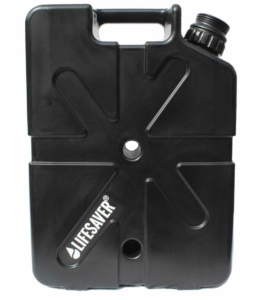
The LifeSaver jerrycan is a portable water purification system designed to make natural water sources (lakes, rivers, stagnant water) safe to drink.
It can filter up to 20,000 litres of water by removing viruses, bacteria, parasites and other contaminants, without the need for any chemicals.
With a capacity of around 18.5 liters, it provides a reliable water reserve while remaining suitable for travel use, whether for bivouacking, expeditions or remote areas.
A dependable solution for securing access to safe drinking water, even in remote environments.
Our real world-use
The LifeSaver quickly became a key part of our self-sufficiency setup on the road.
It’s definitely a fairly bulky piece of gear, but once you start travelling far from towns and infrastructure, you immediately understand why. In remote regions, simply finding water can already be a challenge… finding safe drinking water is another story entirely.
We relied on it heavily in Namibia, especially in the dry mountain regions of the south, where we spent close to a week completely off-grid. In that kind of environment, with no shops nearby and no reliable water source, the LifeSaver quickly becomes more than just a nice piece of equipment : it turns into something essential. Even when locals told us the water was drinkable, we still preferred filtering it for peace of mind. During our time in Angola, for example, there were ongoing cholera outbreaks in certain areas, so we never really took any chances.
To save space inside the vehicle, we decided to mount it directly onto our rear bumper carrier. It turned out to be a very practical solution: the jerrycan stayed outside the cabin, always accessible, without taking up valuable room inside the 4×4.
As a general rule, we rarely drank tap water during our journey across Africa. The LifeSaver allowed us to filter water safely wherever we stopped, then refill smaller bottles that we kept in the fridge so we could always have cold drinking water ready.
And that’s actually something you don’t necessarily think about beforehand : in very hot climates, when the jerrycan sits outside in direct heat all day, the water can become extremely warm. After hours on dusty tracks, it’s honestly not the most refreshing thing in the world. Being able to transfer the water into bottles and cool them down quickly made a huge difference day to day.
Looking back, despite its size, it’s one of those pieces of equipment that brought us genuine peace of mind throughout the trip, while giving us a level of autonomy we probably wouldn’t want to travel without anymore. Here’s the LifeSaver jerrycan:
4/ A compressed air duster
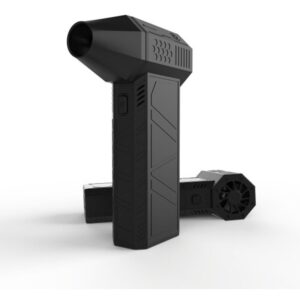
This type of portable air blower is both compact and surprisingly powerful, making it ideal for keeping things clean on the road when space is limited.
Thanks to its small wireless design, it’s easy to carry and store, while still allowing access to hard-to-reach areas : inside the vehicle, tight corners, gear, or camping equipment.
It features several adjustable power levels, making it easy to adapt the airflow depending on the task, whether for light cleaning or more intensive use.
Its built-in battery also provides solid autonomy, making it well suited for travel and off-grid use.
Our real world-use
While preparing for our last road trip, we noticed that many overlanders chose to carry a small portable vacuum cleaner to keep the vehicle clean. It’s probably a great solution, but on our side, we simply didn’t have enough space to bring one along.
We ended up going with this compact air blower instead… and honestly, we were genuinely impressed by how useful this little gadget turned out to be.
We used it almost every morning for a quick “clean-up” in the back of the 4×4, especially after beach camps where sand somehow manages to get absolutely everywhere. It also proved incredibly useful on the dusty tracks of Namibia, where ultra-fine dust still finds its way inside the vehicle even with every door and window closed.
Day to day, it also helped us clean our air filter whenever needed, which, in practice, meant pretty often — as well as the sleeping area inside the pop-top roof, a space that quickly collects sand and dust during long trips.
In the end, it’s a very simple tool, but one that quickly became essential for maintaining a minimum level of cleanliness inside such a small living space.
Compact, powerful, and incredibly practical while travelling, it’s definitely a piece of gear we would recommend to any overlander or anyone travelling off-grid.
Check out similar models on Amazon.
5/ The Esee 6 knife
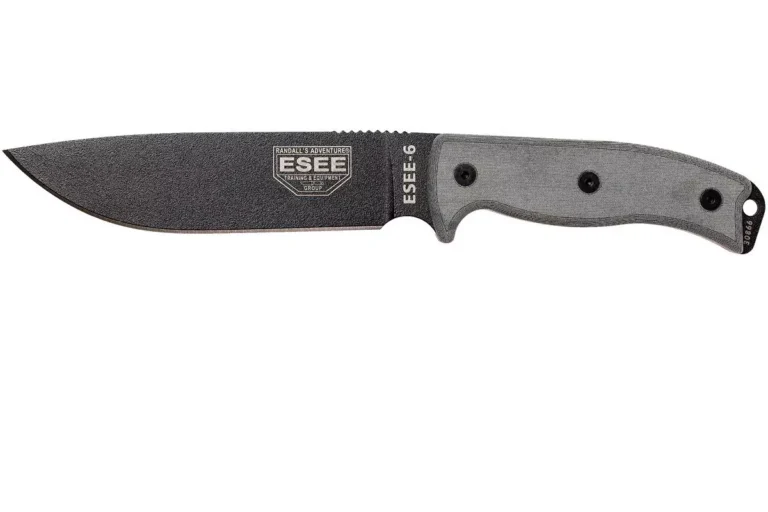
The ESEE Model 6 is a robust survival knife built for demanding conditions. Its 1095 carbon steel blade delivers excellent cutting performance, while the powder-coated finish helps reduce corrosion.
The full tang construction makes it an extremely solid tool, capable of handling intensive outdoor use without issue.
Its slightly textured micarta handle provides a secure and comfortable grip, even in tougher conditions.
It’s definitely a substantial knife (around 335 g), but that weight also gives it a real sense of durability and efficiency out in the field.
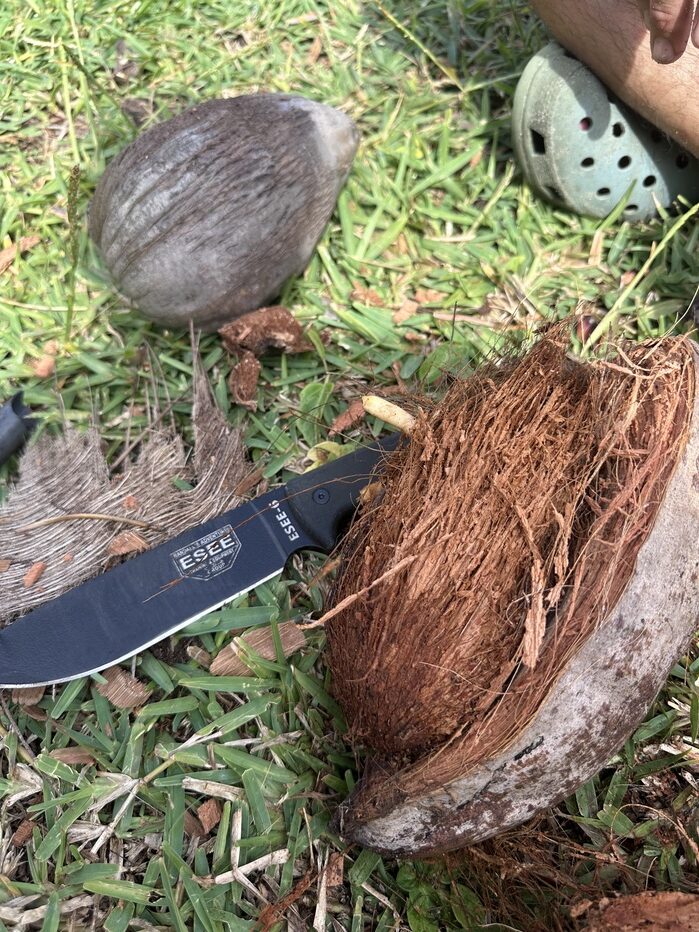
Bushcraft… beach style. Ghana 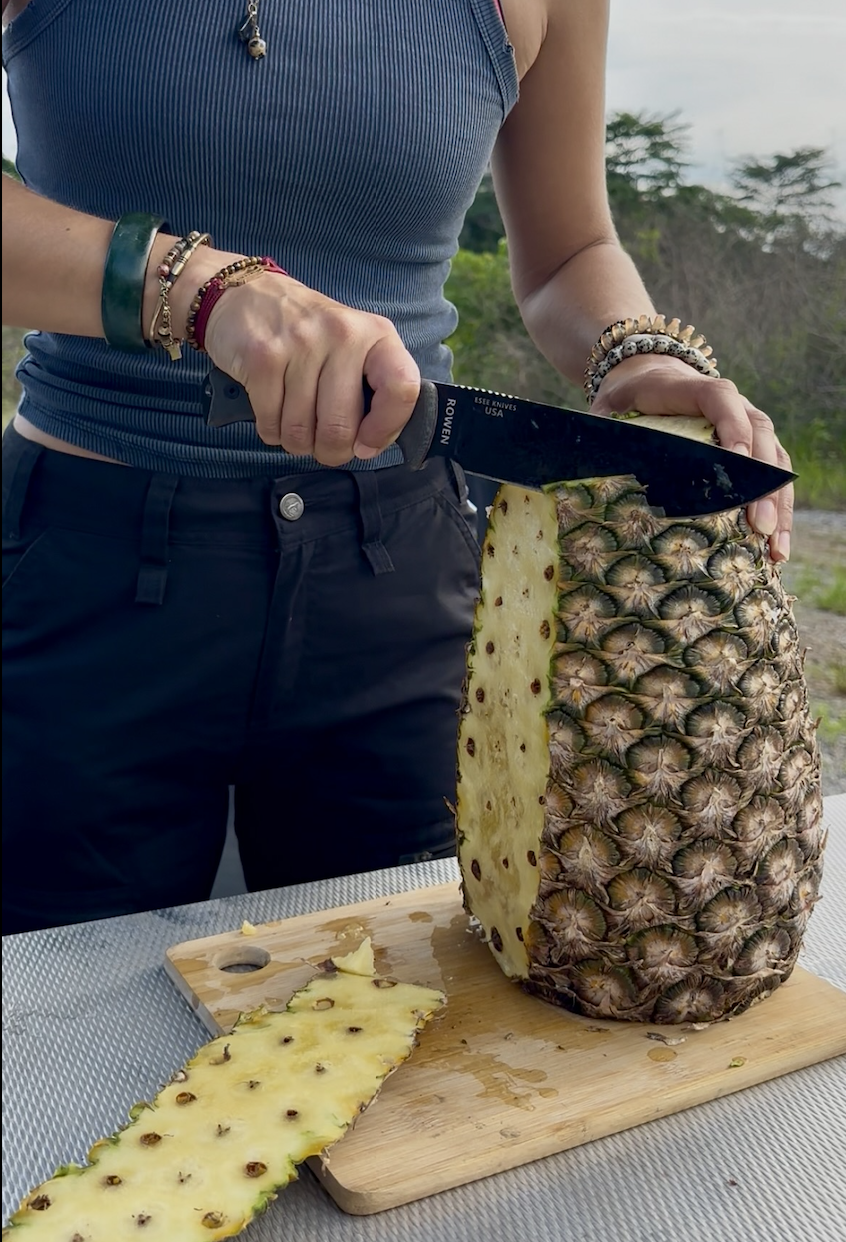
Bushcraft… jungle style. Congo
Our real world-use
On the road, this knife quickly became one of the tools we used almost every day.
Throughout Southern Africa, we constantly used it to prepare campfires (the braai : the Afrikaner version of a barbecue) : cutting logs, splitting kindling, basically everything needed to get a proper fire going after a long day on the tracks.
That’s really where its full tang construction starts to shine : The blade and handle are forged from a single piece of steel, which makes it incredibly solid, even under fairly rough use.
Its main downside (if we had to point one out), is also what makes it so capable : it’s a large, non-folding knife, so you need to dedicate proper space for it inside the setup. On our side, we kept it inside its sheath, mounted next to the driver’s seat so it was always within easy reach.
But its use definitely didn’t stop at campfires. We used it to open coconuts on the beaches of Ghana, cut up a giant pineapple (at least 5 kg!) found in Congo, and even prepare meat out in the bush.
In the end, it’s an extremely versatile tool : capable of handling demanding tasks like wood processing, while still being genuinely useful for day-to-day cooking around camp. Although, let’s be honest… it’s probably not the perfect knife for peeling vegetables — the blade is still pretty thick.
If you want the same one, we’ve added the link here:
Overlanding is really about these small accessories — often discreet, but used again and again.
The ones that save the day when things don’t go as planned. The ones that slowly become everyday reflexes without you even thinking about it.
Looking back, each of these items naturally found its place in our setup. And today, we would head off again with exactly the same gear, without hesitation.
If you’re currently preparing your own trip, keep this in mind: it’s often the details that make all the difference on the road.