Our medical kit
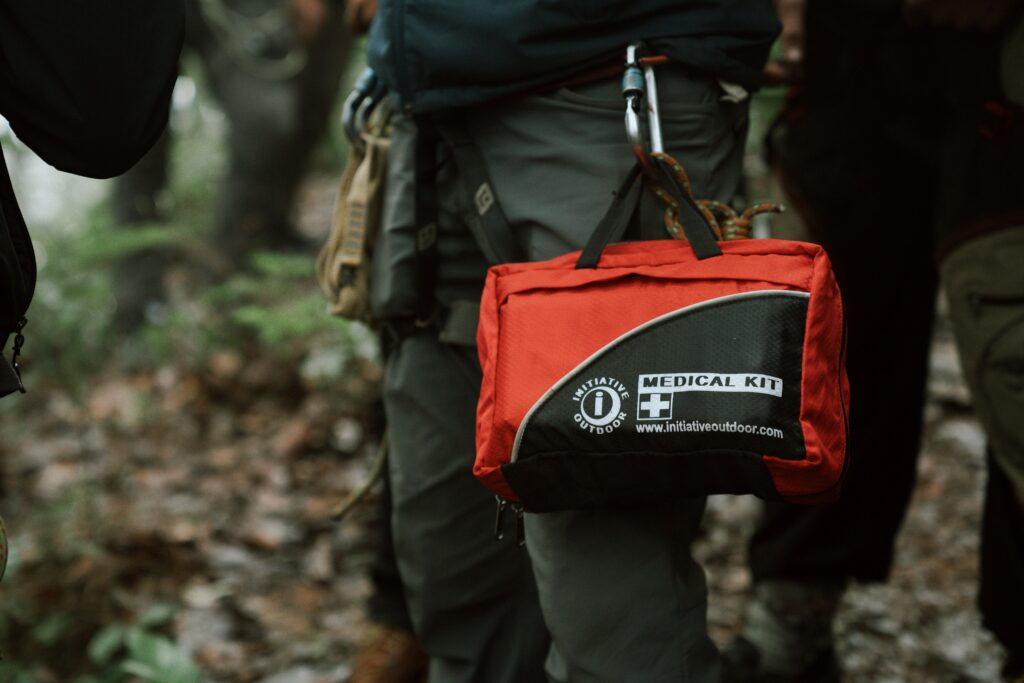
A discreet essential, often overlooked… until the moment it becomes indispensable. In overlanding, most people focus on the vehicle, the route, or the camping setup. Yet one of the most important pieces of gear is often the most discreet : the medical kit. You won’t use it every day… until the moment it becomes essential. From minor day-to-day issues and digestive problems to unexpected situations far from any medical facility, it’s one of those things that mainly provides one thing : the ability to keep travelling with peace of mind. But the real challenge is not only what goes inside it. It’s how you prepare it, organise it, and adapt it to the type of journey ahead. Adapting Your Medical Kit to the Journey There’s no such thing as a universal travel medical kit. Its contents will always depend on the context : – the duration of the trip– the region you’re travelling through– access to medical care– the level of remoteness involved. A road trip across Europe, where medical facilities are only minutes away, obviously doesn’t require the same preparation as a long journey through remote areas of Southern Africa or anywhere far from a structured healthcare network. The goal isn’t to prepare for every possible scenario, but to cover the most likely situations in a practical and coherent way. In our case, the kit was prepared in advance with the help of our doctor, in order to adapt its contents to our itinerary. Before leaving, we also took the time to learn a few basic emergency procedures that can be useful in remote areas, including how to perform a simple suture if absolutely necessary. Of course, the goal was never to replace proper medical care, but simply to be able to handle a temporary situation before reaching professional treatment. We therefore carried only a minimal amount of basic equipment, strictly as an emergency backup. Important : every situation is different, and this article should never replace professional medical advice. Self-medication while travelling can be risky and should always be supervised by a healthcare professional. We also had access to remote consultations through our travel insurance, as well as a medical contact back in France if needed, which adds a real layer of reassurance when travelling far from home. Designing a useful, not overloaded kit Before leaving, like many travellers, we tended to overprepare. As a result, nearly 90% of our medical kit was never used… With hindsight, it highlights a simple reality : a good medical kit is not a complete one, but a relevant one. The goal is to focus on essentials, structure things intelligently, and avoid unnecessary accumulation that only makes the kit harder to use on the road. For this, we chose a simple organisation based on clear categories : – Digestive– ENT– Skin– Injuries– Gynaecology Each item was listed in a simple Excel file, with its name, dosage, and intended use depending on symptoms. It may sound basic, but in real travel conditions, when fatigue or stress set in, this kind of structure makes a real difference. For those who want to build their own system, we’ve made a simplified version of our preparation table available. Two levels of medical kit : Main and accessible Over time, we adopted a two-level system. The main medical kit is a full kit stored inside the vehicle, containing all medical supplies. It is organised in transparent, waterproof pouches, with clearly labelled categories for each type of care. The goal is to protect the contents while keeping everything easy to read and quickly accessible. Alongside this, we kept a smaller kit always within reach, mounted at the rear of the vehicle, containing only daily essentials : pain relief, disinfectant, plasters, digestive treatments, antihistamines, anti-nausea medication, and treatments adapted to the regions we were travelling through. This smaller kit allows for immediate response without having to open or reorganise the entire vehicle. When the medical kit is not enough There are situations where, despite careful preparation, a medical kit reaches its limits. In Namibia and later in South Africa, Étienne experienced a prolonged episode of digestive issues. Despite the treatments available in the kit, the condition did not improve and gradually became concerning. A decision was then made to seek medical care at a local clinic. This kind of situation is a reminder of an essential point : a medical kit is a first response, not a complete solution. It helps manage immediate issues, but it never replaces professional medical advice when a situation goes beyond a certain threshold. A medical kit in overlanding is not meant to be exhaustive. It should be clear, adapted, well organised, and medically validated. The goal is not to carry as much as possible, but to build a simple and efficient system tailored to your own way of travelling. Preparing a medical kit is ultimately about accepting that you can’t control everything, while still being ready to respond when needed. It’s about finding a balance between anticipation and simplicity. And as is often the case in overlanding, it’s the clearest and lightest systems that prove to be the most effective over time.